The Art of the Shutdown: Building Resiliency into Large Diameter Water Systems
By Manny De Pau, PE, LEED AP and Greg Henry, PE
For major water utilities, taking a critical transmission main out of service can create one of the highest-risk periods in the life of an asset. The shutdown itself may last only days, but maintaining system reliability during that window can require years of operational planning, contingency development, and coordination.
Houston Public Works faced that challenge when an aging 66-inch prestressed concrete cylinder pipe (PCCP) water line needed to be taken out of service to connect it to a new 72-inch secondary refill line serving the Southwest Pump Station. The connection was necessary to improve system redundancy, but it also created a limited opportunity to address known distress in the existing line.
By planning the shutdown around the broader needs of the system, the project team was able to manage operational risk, rehabilitate aging infrastructure, and bring new redundancy online within the same outage. For utilities facing similar work, the project offers several lessons in how to make a critical shutdown safer and more valuable.
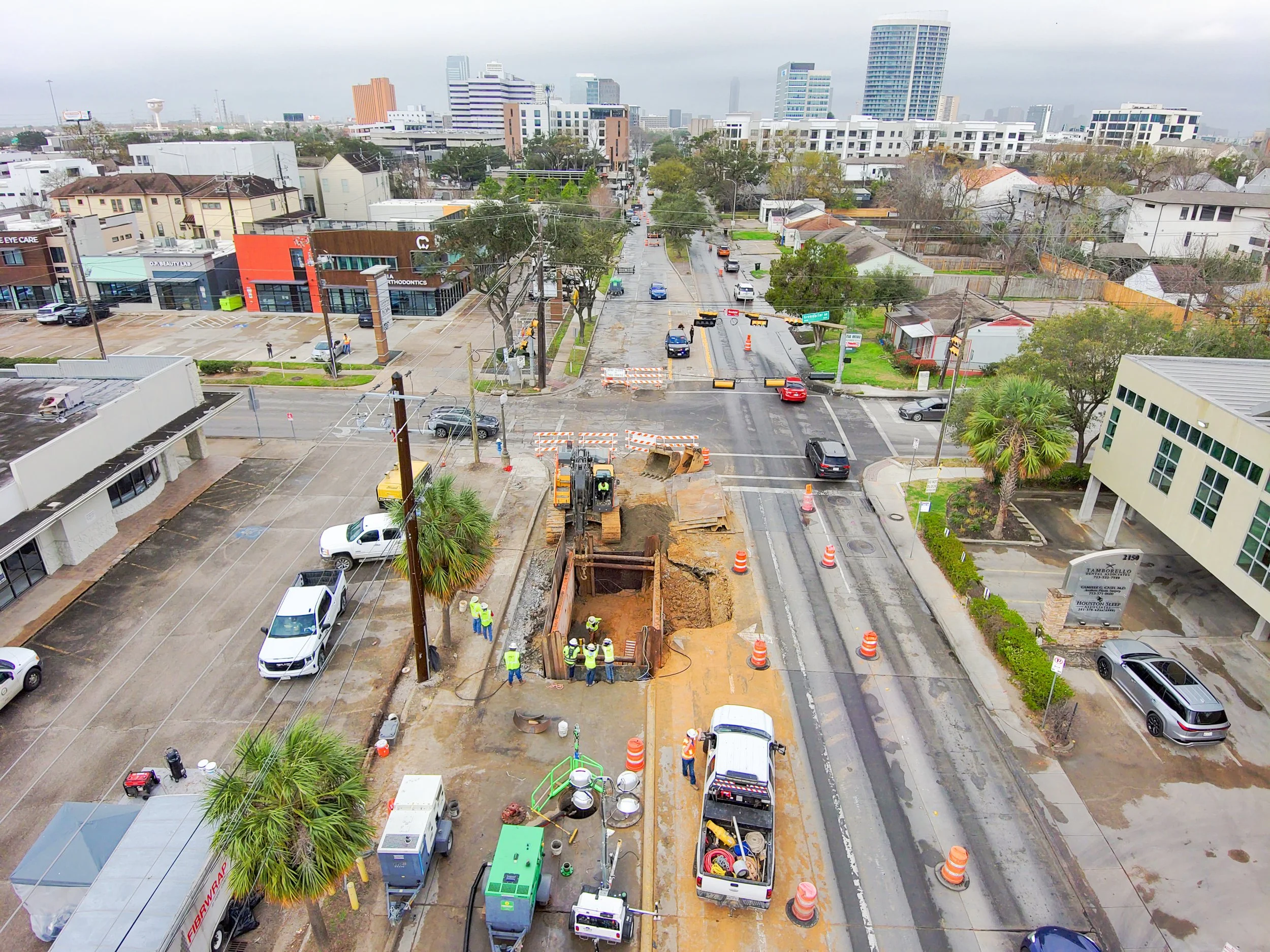
The tie-in between Houston’s new 72-inch secondary refill line and existing 66-inch main required a carefully planned shutdown designed to maintain system reliability while creating long-term redundancy.
Treat the Shutdown as a System Operation, Not Just a Construction Activity
The existing 66-inch line was constructed in the early 1980s and has served as the primary refill line for the Southwest Pump Station. The pump station supplies much of the western half of Houston and also supports regional customers. Houston Public Works developed the new 72-inch secondary refill line to improve redundancy and operational flexibility.
Connecting the two lines required shutting down and dewatering the existing main. In a large transmission network, however, taking one critical asset offline affects far more than the construction site.
An earlier attempt to complete the shutdown had to be postponed. The project team ultimately spent nearly three years preparing for another opportunity and scheduled the work during a low-demand winter period when system conditions were more favorable.
During the outage, the Southwest Pump Station operated at minimum capacity using limited groundwater sources. Other City pump stations relied more heavily on groundwater wells, while operators managed system pressures and tank levels and used strategic valve closures to help protect supply to critical customers, including the Texas Medical Center. After nearly three years of preparation, the shutdown was completed in less than two weeks.
For other utilities, the takeaway is that shutdown planning should begin with the system, not the construction sequence. Understanding alternate supply, pressure impacts, storage, critical customers, valve operations, and contingency conditions before the outage begins can significantly reduce operational risk when a major asset is taken out of service.
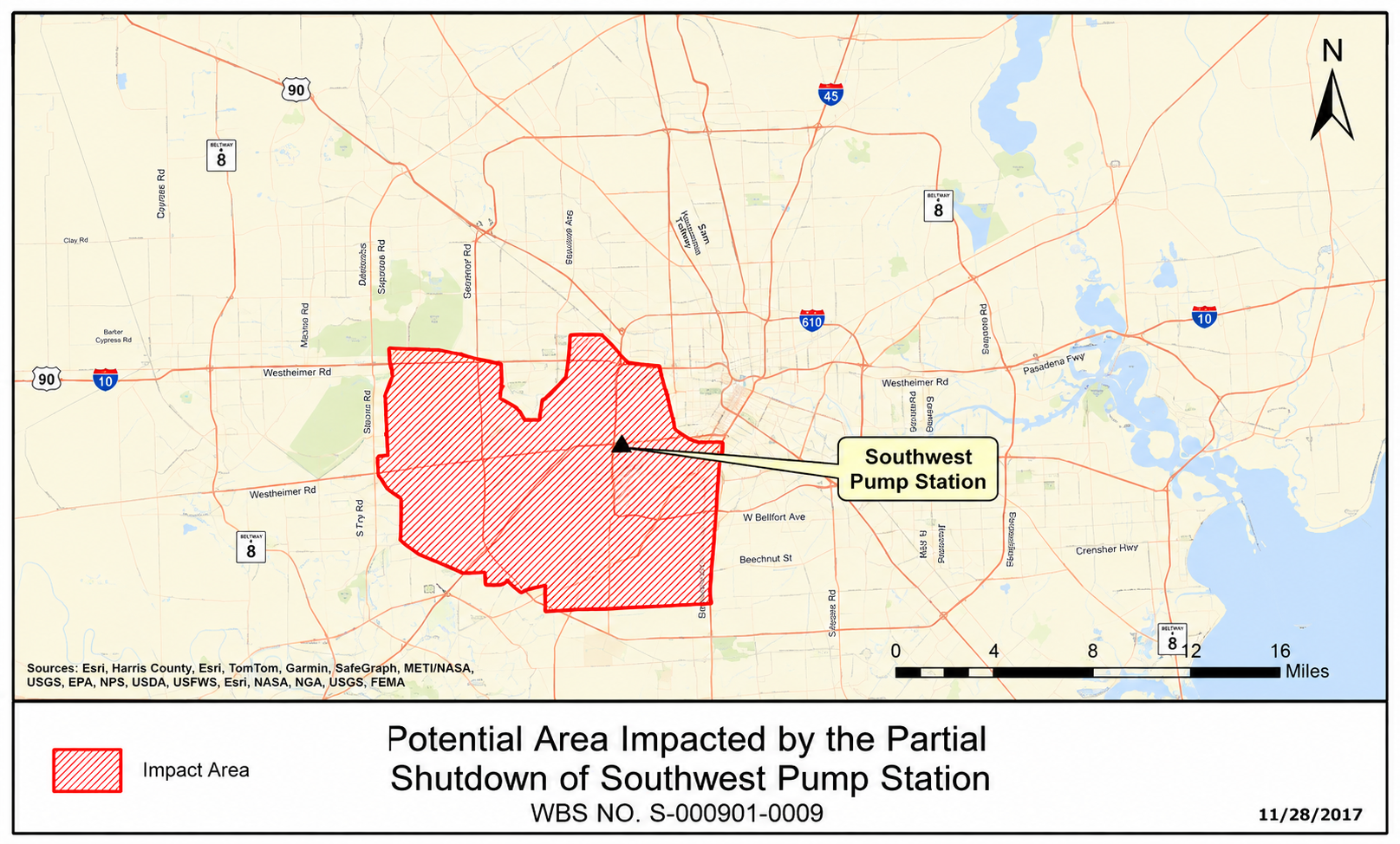
A shutdown of a critical transmission asset can affect a much larger portion of the system than the immediate project area. Planning for the 66-inch line outage required the team to account for water supply, system pressures, storage levels, valve operations, and critical customers.
Use Limited Outage Windows to Address Multiple Needs
The tie-in was not the only concern associated with the existing 66-inch PCCP. A previous condition assessment had identified internal distress in the line, and wire-break monitoring had identified additional areas of concern and the potential risk of failure. Because the line would already be isolated and dewatered for the interconnection, the project team coordinated additional condition assessment and rehabilitation during the same shutdown. Carbon-fiber reinforced polymer (CFRP) lining was installed internally at distressed sections of the pipe, strengthening the 66-inch PCCP without surface excavation.
That coordination allowed Houston Public Works to address two significant infrastructure needs within one carefully planned operational window. Rather than complete the connection and potentially schedule another shutdown later for rehabilitation, the City was able to strengthen the existing asset while it was already accessible.
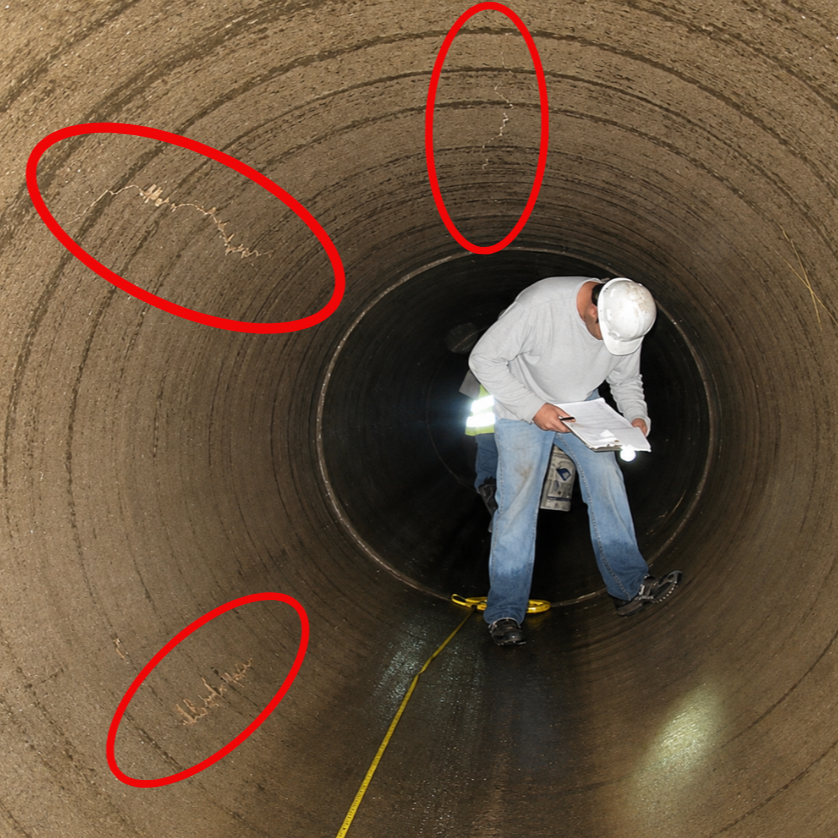
A previous condition assessment identified distress within the existing 66-inch PCCP. The planned shutdown created an opportunity to reassess the pipe and complete rehabilitation while the line was already isolated and accessible.
For owners of aging large-diameter systems, this is where shutdown planning can become part of a broader asset-management strategy. When an outage is unavoidable, utilities can evaluate whether condition assessment, inspection, maintenance, or rehabilitation work can be safely incorporated into the same window.
Doing so can reduce the number of future shutdowns, limit repeated operational exposure, and maximize the value of the planning and resources already required to take the asset out of service.
“When utilities have a limited opportunity to take a critical asset out of service, the goal should be to make that window count. By planning beyond the immediate tie-in, we were able to reduce operational risk, address known infrastructure needs, and improve the system’s long-term flexibility within the same shutdown.”
– Greg Henry, PE
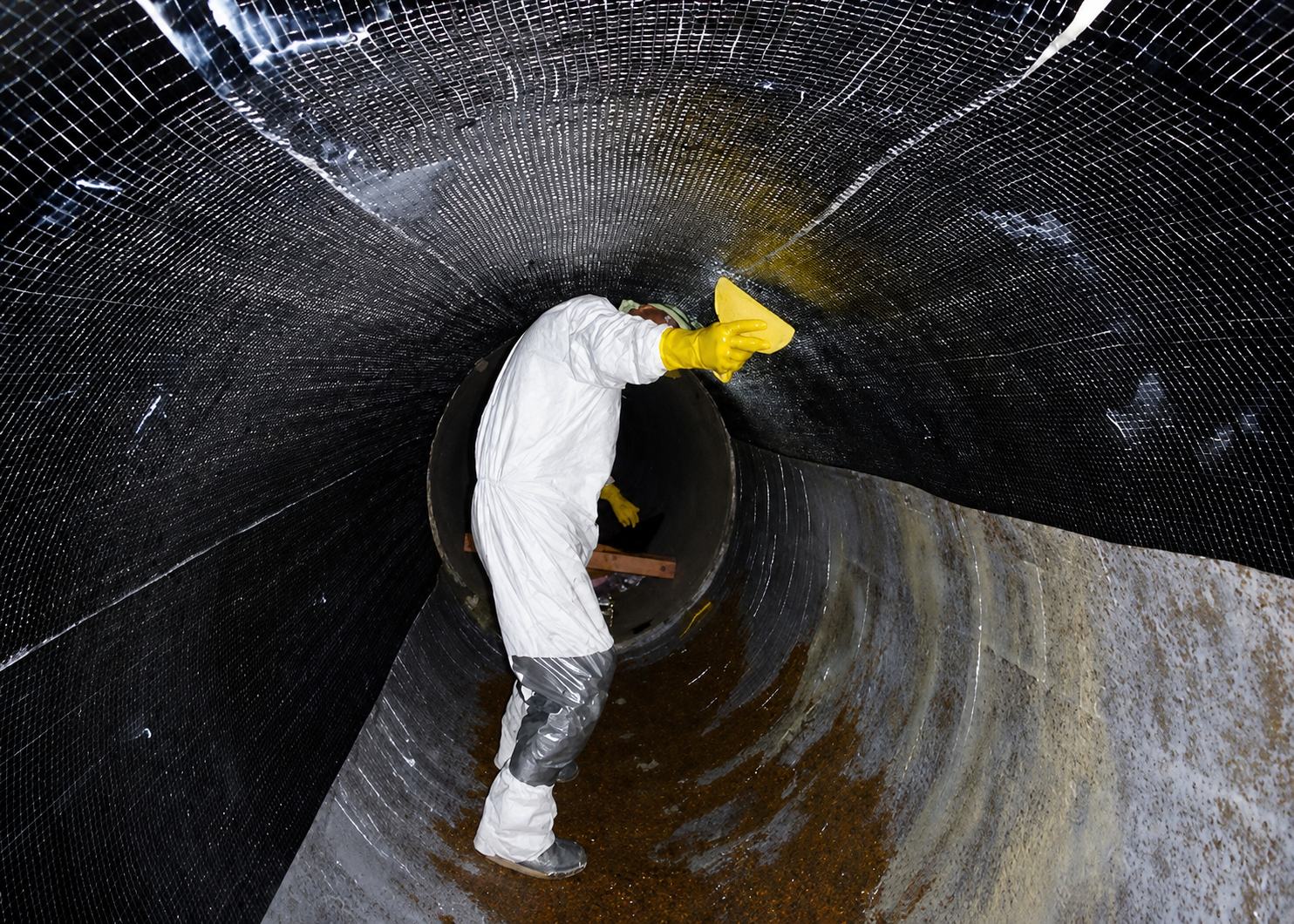
Carbon-fiber reinforced polymer (CFRP) was installed internally to strengthen distressed sections of the existing PCCP without surface excavation, allowing rehabilitation to be completed within the planned outage.
Build Redundancy Before It Is Urgently Needed
The project also demonstrates the value of creating operational flexibility before the system reaches a point where that flexibility is required. The project team advocated for adding approximately 1,000 linear feet of scope so the new 72-inch line could connect directly to the existing 66-inch main before completion of the fourth and final project segment extending to the Southwest Pump Station. That connection allowed three of the four planned secondary refill line segments to operate as a standalone system and begin providing beneficial use and redundancy earlier.
The resulting dual-feed configuration gives Houston Public Works additional options when either line must be taken out of service for rehabilitation, maintenance, or other infrastructure work. It also supports future highway improvements that will require a portion of the existing 66-inch line to be removed from service.
For major utilities, redundancy is valuable not only during an emergency. It can also create the operational flexibility needed to maintain and rehabilitate aging infrastructure in a controlled way rather than waiting until a failure dictates the schedule.
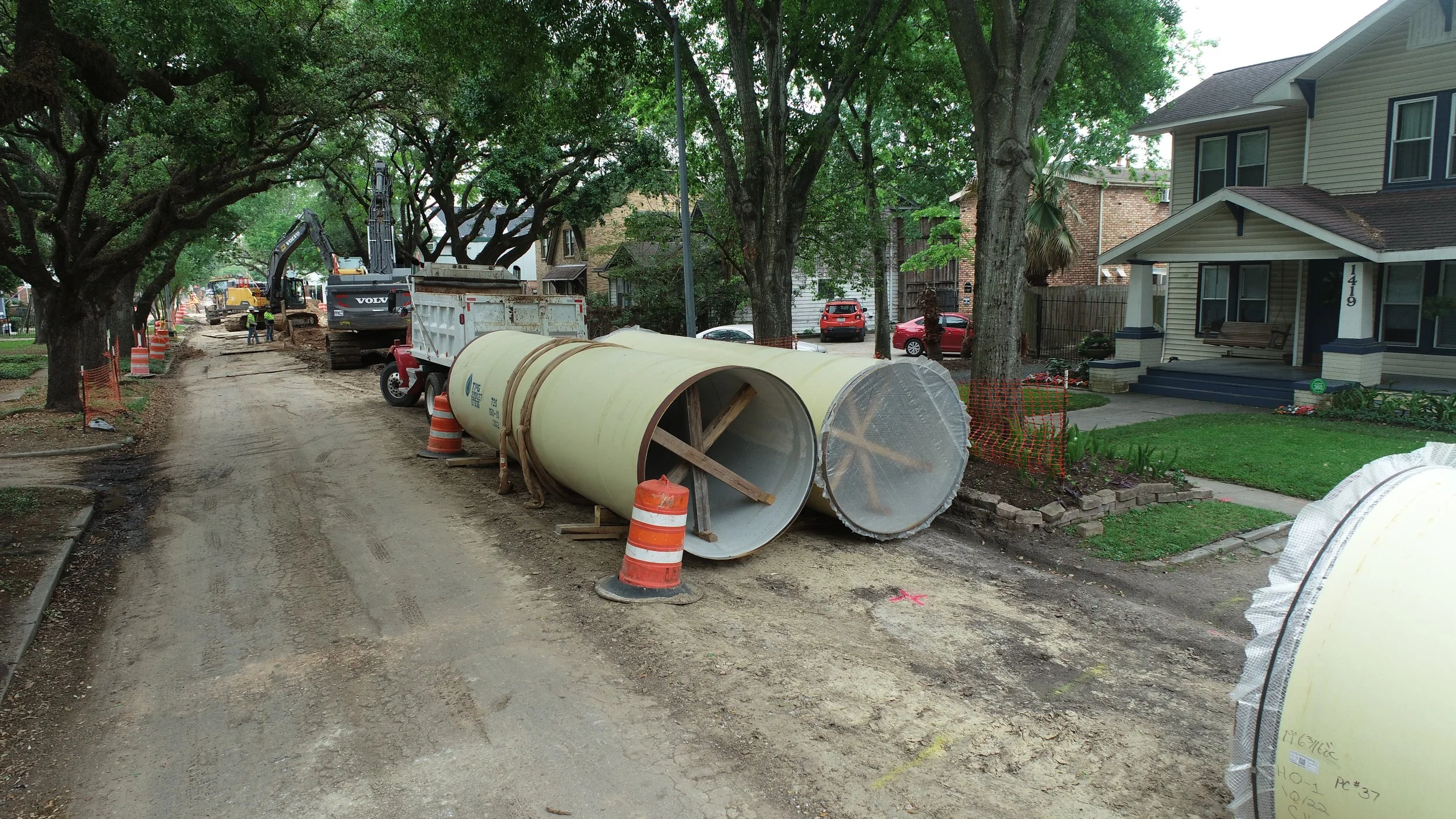
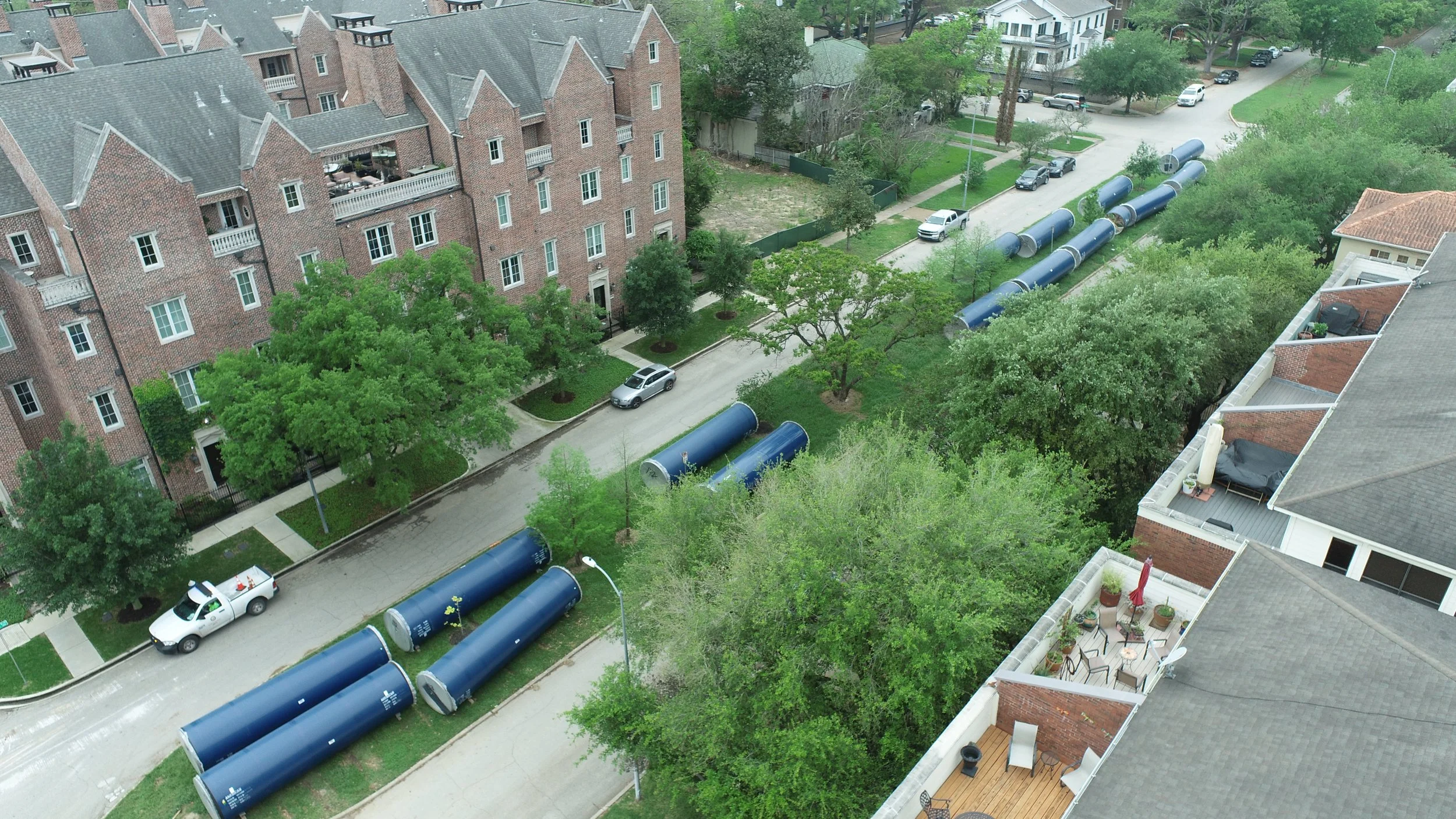
Sections of the new 72-inch secondary refill line staged for installation. The additional line provides redundancy and greater operational flexibility for the Southwest Pump Station water supply system.
Plan the Outage Around Long-term Value
The immediate objective of Houston’s shutdown was straightforward: connect a new 72-inch water line to an existing 66-inch main.
But treating the outage as part of a larger system and asset-management strategy allowed the project team to accomplish more. The shutdown was used to manage a complex system transition, rehabilitate distressed PCCP, establish new redundancy, and prepare the system for future infrastructure needs while maintaining uninterrupted service. Those outcomes were possible because the work was planned around more than the tie-in itself.
For utilities managing aging transmission infrastructure, critical shutdowns are often unavoidable. The opportunity lies in how they are planned. Considering operational risk, existing asset condition, future maintenance needs, and redundancy together can help utilities make better use of limited outage windows and strengthen the system beyond the immediate project.
This article is based on “The Art of the Shutdown: Transforming Downtime into Long-Term Resiliency,” presented by Greg Henry, P.E., and Manny De Pau, P.E., at APWA PWX 2026 in Houston.

Greg Henry, PE, is a professional engineer with 25 years of experience in large-diameter water and wastewater pipeline assessment, rehabilitation, design, and construction oversight. His experience includes trenchless methods, tunnel design, emergency repairs, condition assessments, and shutdown planning.

Manny DePau, PE, LEED AP, is a professional engineer with 30+ years of experience in municipal infrastructure, program management, and project planning. His work includes water transmission, water treatment, utility and roadway design, stormwater infrastructure, and construction oversight.
Related Services

Explore Water → Planning, design and construction services for water supply, transmission and distribution infrastructure.
More Insights