By Mackrena Ramos, PE, Melissa Mack, PE, PMP, and Greg Henry, PE
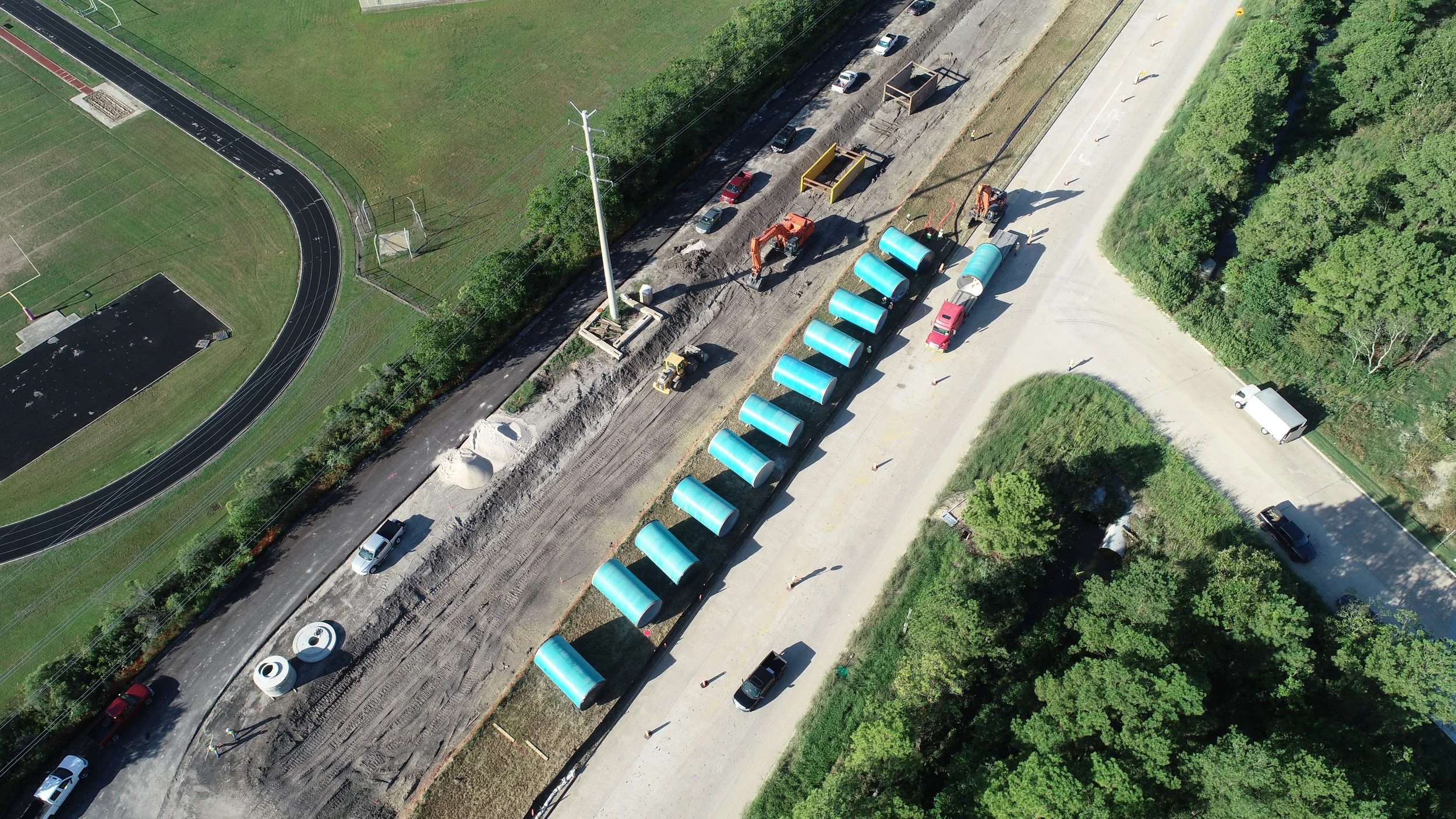
Houston’s large-diameter water transmission projects demonstrate how early planning and coordination can help teams anticipate construction challenges, manage risk, and keep complex programs moving as conditions change.
Across the country, public agencies are investing to expand capacity, replace aging infrastructure, improve reliability, and prepare essential systems for future growth. The scale of these investments and the desire to limit individual project size within local contractor bonding capacities require large capital programs made up of multiple projects that may take years or decades to plan, design, and construct.
Construction becomes especially challenging at that scale. Project scopes and schedules need to remain fluid enough to enable existing systems to remain in operation. Changes on one project can affect work elsewhere. On large-diameter pipeline programs, various jurisdictional requirements, construction access, tunneling constraints, long-lead materials, environmental considerations, and the sequence in which segments become operational can further influence decisions made during design.
In recent years, the City of Houston has utilized several such programs to extend its surface water transmission system across the city. The Surface Water Transmission Program (SWTP) and related regional transmission efforts provide an example of managing construction challenges at a large scale. Since 1985, these programs have guided the planning, design, construction, assessment, and maintenance of more than 300 miles of large-diameter transmission infrastructure ranging from 24 to 120 inches, involving multiple contracts, operating requirements, and regional partners.
Address Construction Requirements Before Work Reaches the Field
Large capital programs involve multiple design firms and contractors working on separate projects. Advancing that work concurrently increases the importance of establishing consistent design and construction requirements.
On the Northeast Transmission Line (NETL), pipe diameters reached up to 120 inches. Steel pipe was selected at the program level to standardize key design elements and future maintenance requirements across thirteen contracts. The City and LAN also developed criteria for utility separation, backfill, loading over vulnerable utilities, haul routes, and equipment and material staging.
Across Houston’s large-diameter transmission work in urban neighborhoods, the key was to identify how work would be implemented within limited rights-of-way, existing and ongoing development, and access and staging constraints during design before contractors reached the field. On major pipeline and tunnel projects, those considerations can also influence shaft locations and construction methods, material and equipment access, excavated-material removal, and impacts to surrounding properties.
The series of projects comprising the Southwest Pump Station Secondary Refill Line presented another set of constraints as the 72-inch pipeline was constructed through established neighborhoods in Midtown and Montrose. The project included approximately 1,500 tree evaluations, including mature live oaks more than 100 years old. The team adjusted the alignment where needed, coordinated tree protection measures, and used tunneling in sensitive areas. Construction planning also had to account for historic neighborhoods and long-established institutions.
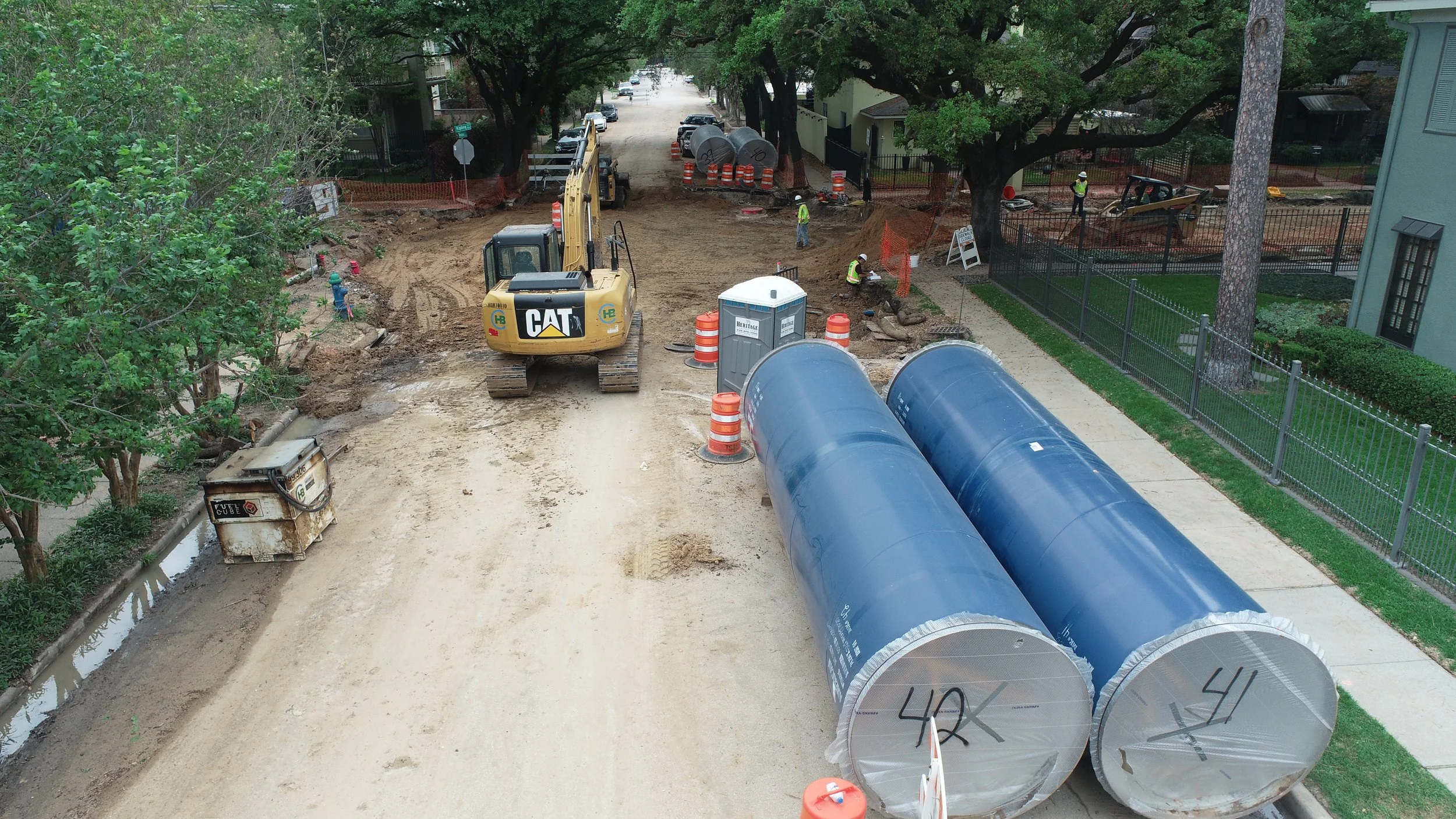
Construction of the Southwest Pump Station Secondary Refill Line through established neighborhoods required careful planning around mature trees, existing development, access, utilities, and limited construction space.
Environmental requirements influenced other projects. Surveys were performed for bald eagles and nesting birds, while wetlands and other sensitive areas were protected through measures including fencing and, in some locations, trenchless construction.
Tunneling required additional technical planning. Design and construction had to account for groundwater control, mixed soil conditions, special shaft designs, and crossings beneath major transportation corridors. Shaft and tunnel decisions can also affect construction access, worker safety, and the ability to inspect and maintain infrastructure after it enters service. Considering those needs during design can help avoid solutions that simplify construction at the expense of long-term operations and maintenance.
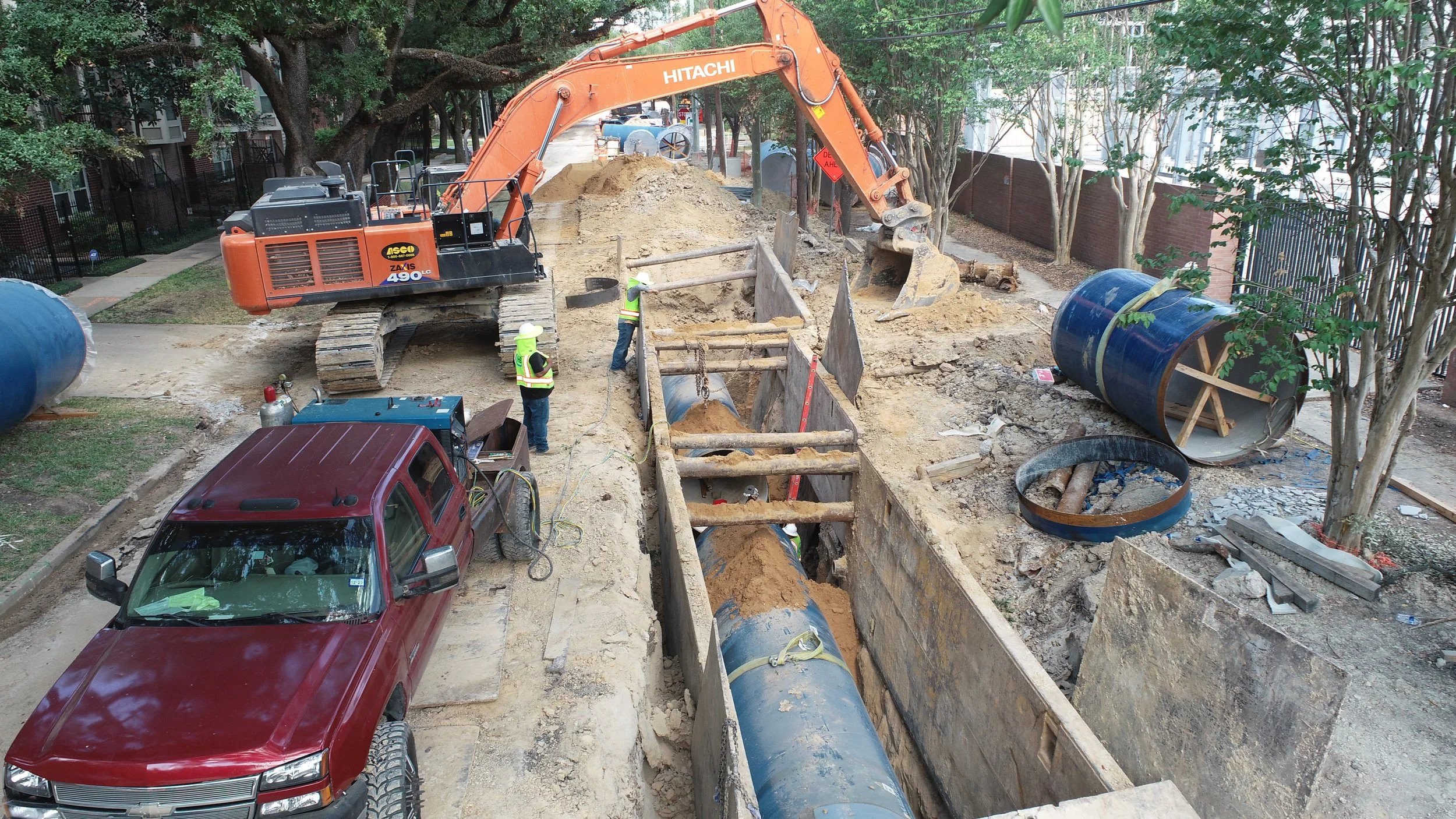
Surface water transmission line construction in Houston has required specialized approaches to tunneling, groundwater control, shaft design, and work within constrained urban corridors.
Match procurement and packaging to the work
Procurement provides another opportunity to anticipate construction needs. Competitive sealed proposals were used on several complex projects, allowing the City to consider contractor qualifications and experience in addition to price. Contractor workshops also helped communicate technical requirements and constructability considerations and accept contractor feedback before bidding.
On long-duration pipeline programs, how work is packaged and sequenced can affect construction schedules, access to specialized contractors, commissioning, and phasing around long-lead materials. Considering those issues alongside the overall program schedule can help prevent one package or procurement decision from causing delays or rework for adjoining packages.
“On a complex capital program, the decisions made before construction often determine how many options remain when challenges reach the field and conditions begin to change.”
– Greg Henry, PE
Account for Dependencies Between Contracts
A capital program may be divided into individual contracts, each with distinct construction requirements, but the completed projects must ultimately operate as an integrated system.
NETL was constructed through 13 contracts that progressed on different schedules. Some intermediate segments were completed before adjoining sections were ready, requiring the project team to determine how to manage those pipelines until the full transmission line could be commissioned. As program manager, LAN coordinated with the City of Houston’s Drinking Water Operations group on issues including whether completed sections should remain empty or be filled and disinfected and how water quality would be maintained until full service. Ultimately, the City’s operations group decided to fill the pipeline, test periodically, and chlorinate as needed when levels dipped below the regulated standards.
Another program, the Southeast Transmission Line (SETL), provides an additional example. As technical advisor, LAN supported the City of Houston and seven other co-participant cities to evaluate four alternatives for connecting a proposed 54-inch line to an existing 96-inch prestressed concrete cylinder pipe. The evaluation concluded that two would have required either a complete shutdown or significant pressure reductions that could not be accommodated while meeting water demands.
The co-participants ultimately agreed to extend SETL approximately 1.5 additional miles to the Southeast Water Purification Plant. The solution required additional engineering, real estate acquisition, cost, and schedule but avoided the construction risks of tapping the aging 96-inch line and allowed the new system to operate independently. This minimized the immediate construction impact and also provided permanent redundancy for the aging portion of the system.
The example illustrates why the shortest construction solution is not always the best program solution. Evaluating operating requirements, commissioning, future maintenance, and system flexibility alongside construction cost can preserve options before construction and operating constraints narrow the available solutions
Establish Clear Coordination and Decision-Making
Large regional infrastructure efforts can involve multiple agencies, consultants, design firms, construction managers, and contractors. Defining responsibilities and decision-making authority early helps teams respond when issues arise and reduces the risk of coordination delays.
SETL involves eight participating entities, with Houston serving as managing co-participant and LAN as technical advisor, along with multiple design and construction management firms. A roles-and-responsibilities matrix, recurring progress meetings, coordinated design reviews, field visits, and co-participant discussions provided structure for resolving issues and coordinating decisions.
The same need for visibility continues during construction. On NETL, monthly construction updates, including drone video, kept the City’s internal teams and four water authority partners informed across the 13 contracts. Because the partner authorities had approval authority for major change orders and claims, maintaining visibility into construction progress helped support timely decisions.
Mackrena Ramos, PE, has 27 years of experience specializing in large-scale water transmission, distribution programs, and capital improvement planning. Her leadership on the City of Houston’s Surface Water Transmission Program includes managing design teams, budgets, schedules, and stakeholder coordination for complex urban infrastructure projects.

Greg Henry, PE, is a professional engineer with 25 years of experience in large-diameter water and wastewater pipeline assessment, rehabilitation, design, and construction oversight. His experience includes trenchless methods, tunnel design, emergency repairs, condition assessments, and shutdown planning.
Melissa Mack, PE, PMP, is a LAN principal-in-charge with nearly three decades of engineering and project management experience specializing in hydraulic and transient modeling, master planning, and water infrastructure design.
Related Services
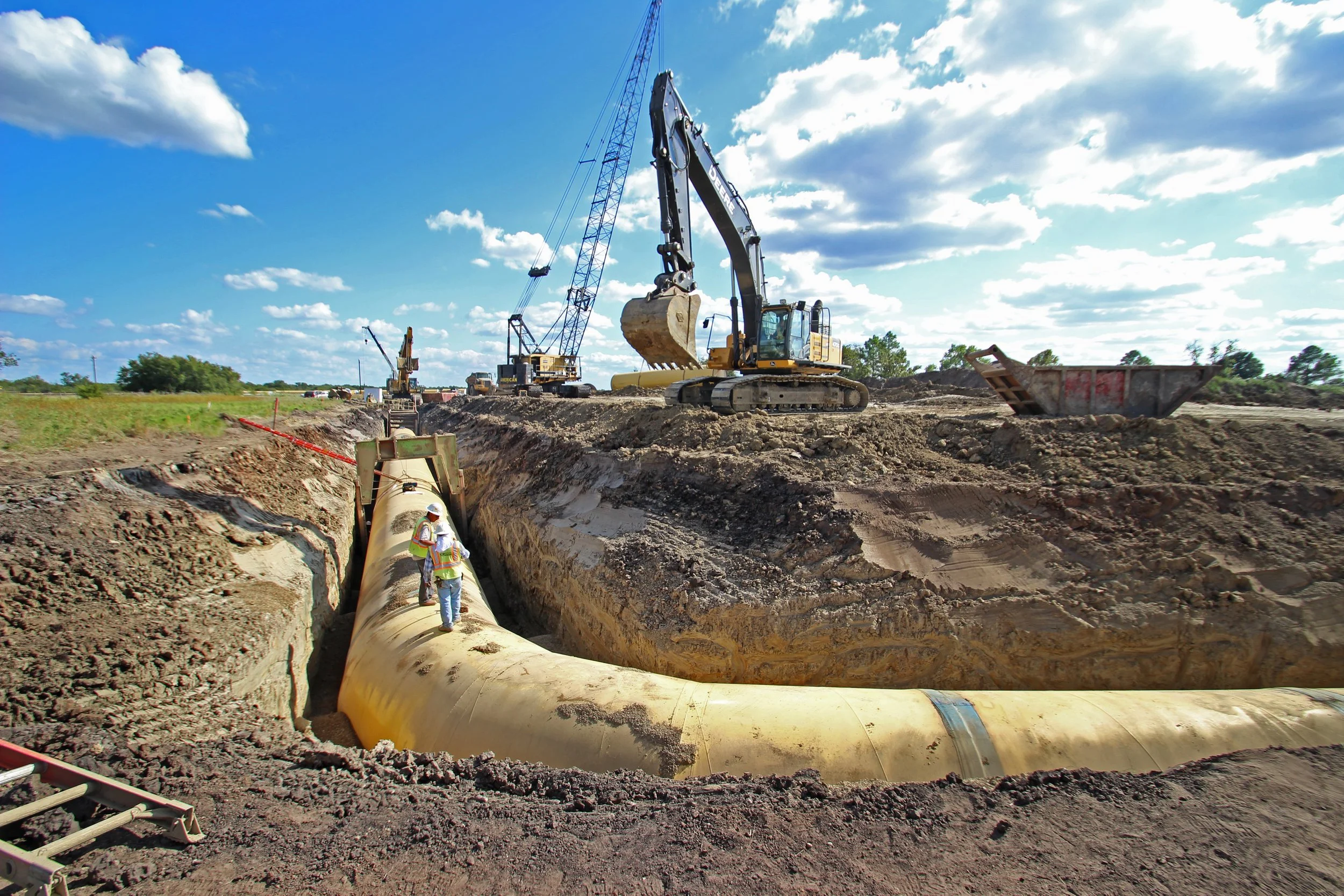
Explore Water → Planning, design and construction services for water supply, transmission and distribution infrastructure.
More Insights